
Scott County Criminal Docket Searches
The main online tool is Search ARCourts. It is the Arkansas Judiciary portal for courts on the Contexte system. There is no separate Scott County criminal search screen. No case number? Run a participant search by name. With a case or citation number, use the Cases search instead. Advanced filters let you narrow by Scott County, court location, case type, and date range. Before opening a common-name match, compare the case number and court. Have the name as written on court papers, the likely court, and a rough filing period in hand. Keep the punctuation in any known case number. A Scott County criminal docket search then takes a few simple steps:
- Open Search ARCourts and choose Participants or Cases.
- Enter the name, criminal case number, or District Court citation number.
- Set County Name to Scott and narrow the court location or case type when available.
- Open the match, then review Docket Entries, charges, dispositions, and Future Events.
- Call the clerk that holds the case when an entry, image, or current setting is unclear.
Reading Search ARCourts costs nothing. Some entries link to public documents, but the portal does not promise an image for every one.
Scott County Criminal Docket Division
Under the 2026 Fifteenth Judicial Circuit plan, every Scott County circuit criminal case heard in Waldron sits in Division 1. That assignment covers general-jurisdiction criminal work, criminal appeals from District Court, civil forfeiture, and adult civil commitment matters. The official circuit-judge directory lists the three judges serving the four-county circuit.
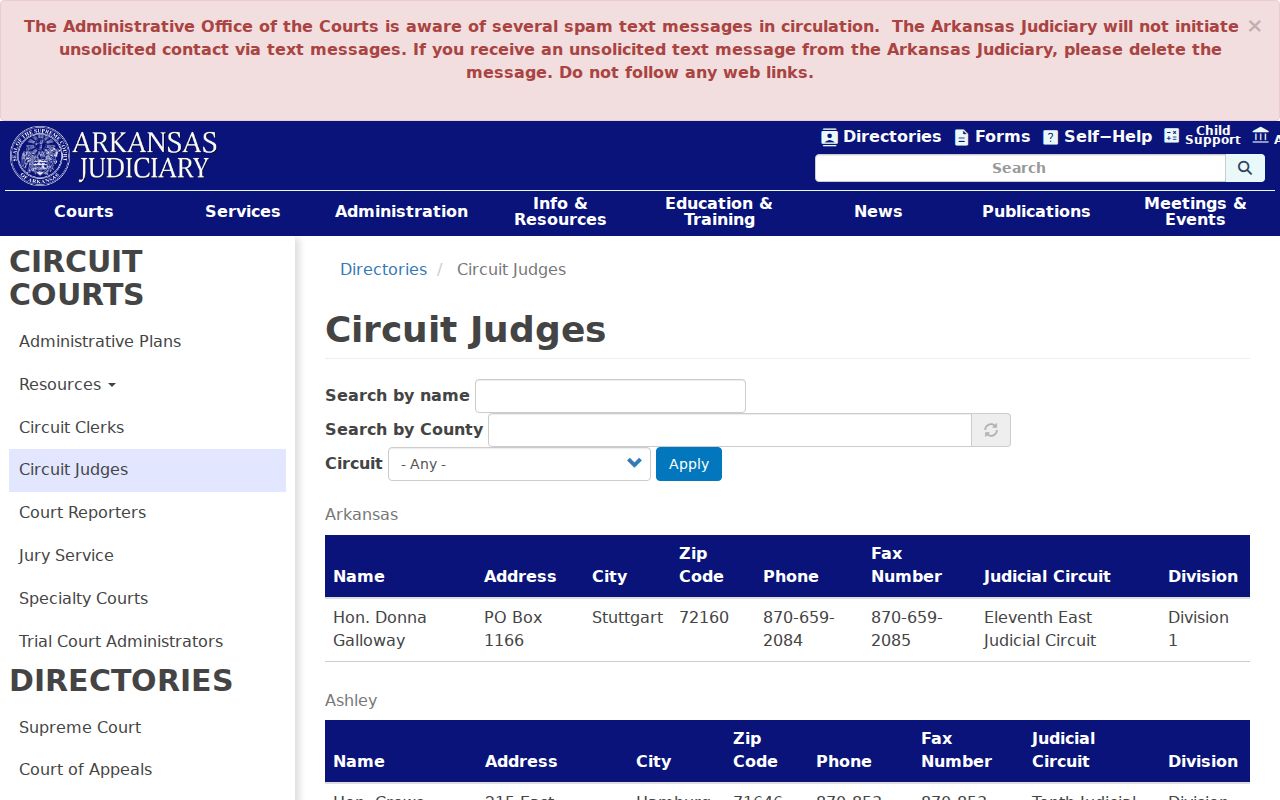
The directory maps the judicial structure, but the Scott County Circuit Clerk keeps the records themselves. Division 1's assignment also means a Circuit Court search and a District Court search are two different registers. A lower-court appeal opens new Circuit Court docket activity under its higher-court case number.
Criminal Dockets: What They Show
A Scott County criminal court docket opens with a header. It then builds a dated history. Search ARCourts labels that history "Docket Entries." Statewide criminal codes often include CR, but never invent a Scott case number. Copy the exact identifier from a citation, summons, notice, or live court result.
| Case number | The official key, which may contain a criminal code such as CR, year, sequence, division, or suffix. |
|---|---|
| Court and judge | The filing location and assigned judicial officer; an assignment can later change by order. |
| Charge block | The allegation, count, code or statute, classification, and disposition when entered. |
| Docket Entries | Dated filings, motions, notices, clerk acts, hearings, orders, and judgment activity. |
| Future Events | Upcoming settings such as plea, pretrial, trial, or sentencing, subject to later reset. |
| Documents | Links to some public filings; a missing image may still be held in the clerk's file. |
Bond and financial fields show up when entered, though availability varies. An online balance is not a certified account, and a docket summary is not a certified judgment.
Scott County Criminal Docket Clerks
Scott County criminal dockets run through two offices. Circuit Court Division 1 hears felonies, other general-jurisdiction criminal matters, and District Court criminal appeals. The Scott County Circuit Clerk keeps that docket at 190 West First Street, Box 10, Waldron, AR 72958, phone 479-637-2642.
Scott County District Court, Waldron Department, handles misdemeanors, violations, traffic matters, and preliminary criminal proceedings within its authority. Its Chief Clerk maintains that separate docket at 190 West First Street, Box 15, Waldron, AR 72958; call 479-637-4694. Always use the issuing court named on the citation or notice. Both offices share a street address. Yet sending a District matter to the Circuit Clerk can still delay the answer.
| Court | Criminal docket | Record office |
|---|---|---|
| Scott County Circuit Court | Felony, general criminal, District appeals | Circuit Clerk |
| Scott County District Court | Misdemeanor, violation, preliminary matters | District Court Chief Clerk |
Criminal Case Stages on the Docket
Read the Scott County criminal docket in time order. The initiating instrument starts the case, but an information or indictment is not proof of guilt. Early entries for process, bond, counsel, and appearances show what happened next. A motion is only a request. A later order tells whether the judge granted it. Check plea and arraignment entries against later changes too.
Docket flow: Filing › Arraignment › Pretrial › Plea or Trial › Disposition › Sentencing.
At the end, read each charge separately. One count can be dismissed while another ends in a conviction or deferred result. The judgment and sentencing order give the exact outcome. When the criminal docket cites an appeal or related case number, search that new number. Do not expect all higher-court activity on the original register.
Note: A bond entry concerns release or security. It does not decide whether the charge is proved.
Scott County Criminal Docket Outcomes
A charge and its disposition answer different questions. The charge states what the prosecution alleges; the disposition records the procedural result once one is entered. The Arkansas Judiciary court-staff resources link official charge codes, Administrative Orders, and annual statistics used in court administration.
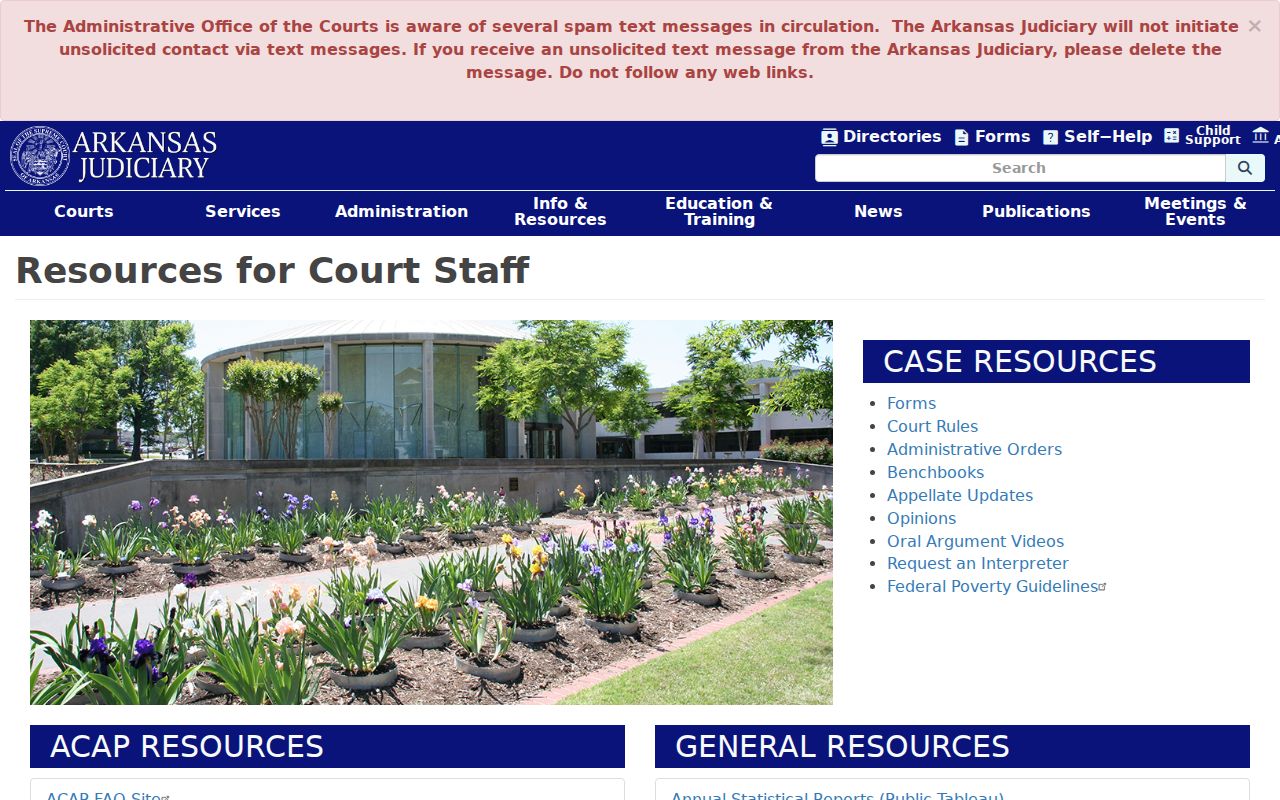
Those resources offer statewide context, but the live Scott County case controls. "Pending" means no final result has been recorded for the relevant matter. "Nolle prosequi" records a prosecutor's choice not to continue a charge at that time. It is not an acquittal. "Dismissed," "convicted," "deferred," and "appealed" each carry distinct effects that depend on the associated order.
- Disposition
- The recorded outcome of a charge or case.
- Nolle prosequi
- A formal decision by the prosecution not to continue a charge at that time.
- Acquitted
- A not-guilty result after adjudication.
- Deferred
- A result involving conditions whose exact terms are set by the court's order.
Scott County Criminal Docket Courts
Criminal felonies in Scott County belong to Arkansas Circuit Court. It is the trial court of general jurisdiction, sitting in Waldron within the Fifteenth Judicial Circuit. The Circuit Clerk does the hands-on work: filing and docketing criminal papers, attending court, issuing process, keeping the record, and reporting case data to the Administrative Office of the Courts. Authorized filers lodge papers through eFlex. Anyone can read them through Search ARCourts. The filing tool itself is not a public docket viewer.
District Court sits at the same address, but it stays a separate, lower court. A misdemeanor or preliminary matter there never turns into a Circuit docket on its own. When a District criminal judgment is appealed, Division 1 takes the case. The appeal gets its own register and number. If an entry cites a destination number, the wider Scott County docket search helps track it down.
Scott County Criminal Docket Fallbacks
Sometimes the Scott County criminal court docket lists a case, yet no filing image will open. Ask the responsible clerk for that exact document. Work the chain in order. Search ARCourts first, then a phone call to the Circuit or District clerk. Next comes inspection at the courthouse. The last step is a written copy request. Before mailing anything, ask whether a public terminal exists, because Scott County does not publish that detail.
A mail request should name the court and the case number. Add the document title and date. State plain or certified copy type, your return address, and a contact method. Call ahead for the current fee and accepted payment. There is no local criminal-copy fee list and no online copy-order form. Fax lines exist. A listed fax number does not mean an unsolicited order will be accepted. The county Circuit Clerk page offers a live email link, while the District listing posts dhallscdc@gmail.com. Verify the address first, and never email a Social Security number or full account number. Older files may sit on paper, in bound dockets, on microfilm, or under gaps created by the county's courthouse-fire history.
No online match? Do not infer that no case exists. Check spelling, court, date range, and access limits, then call the filing court.
Access Rules for Criminal Dockets
One rule controls most of this: Arkansas Supreme Court Administrative Order No. 19. Search ARCourts leaves out confidential information that law, rule, or court order excludes. Under Administrative Order 19.1, protected details come off the public copy. A prescribed unredacted copy goes under seal instead. A missing field or image proves nothing. It does not mean the charge was dismissed or never filed.
For juvenile-record confidentiality, the official Arkansas legislation search is where the source statute lives. It is Ark. Code Ann. §9-27-309.
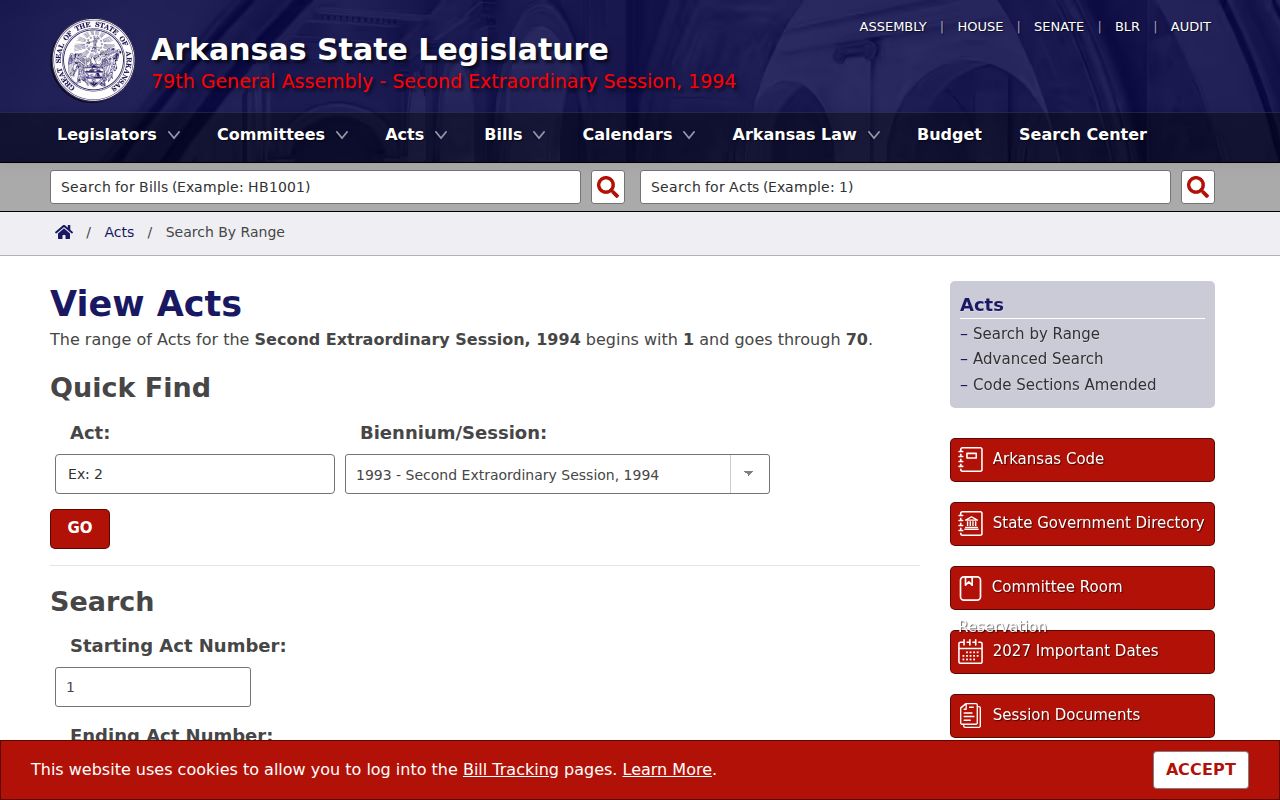
That statute is the reason covered juvenile criminal information stays out of an ordinary public docket search. Sealed cases and protected identifiers face the same limits. The Arkansas Freedom of Information Act covers public records generally, but court-case access follows the Supreme Court's court-record rules and the filing clerk's own process.
Key access rule: Public docket data can be searched for one's own case, a court date, procedure, history, or a public matter, but restricted content stays with the court.
Scott County Criminal Docket Counts
When several counts end differently, go count by count. Match each disposition to its own date and order. Resist the urge to stretch the first visible result across the whole case. Then scan Docket Entries. Look for a judgment, a sentencing order, a dismissal, or a later amended entry. When exact wording matters, a certified judgment from the Circuit Clerk or the District Court clerk is the sound source. For a same-day setting, call the court, not AOC technical support.
Portal support can fix search behavior. It cannot interpret a Scott County charge, verify a bench ruling, or confirm a recent reset. Counsel and formal court notices still matter. The newest valid order beats an old calendar entry every time, and only the court itself can settle a conflict between two displayed dates.