
Scott County Civil Docket Searches
Begin any Scott County civil docket search at Search ARCourts. Pick Participants when all you have is a name. Pick Cases when you hold an official case number. The Advanced Search fields filter by Scott County, court location, case type, and date. That tames broad results. Enter the most complete name you can. Then check the returned court and case number against your papers instead of trusting the first hit.
A reliable Scott County civil docket search follows a short sequence:
- Identify whether the matter is Circuit civil, domestic relations, probate, or District civil.
- Search the name, organization, case description, or exact case number.
- Apply Scott County, court-location, case-type, and date filters.
- Open Docket Entries and compare filings, later orders, and Future Events.
- Ask the correct clerk for a missing paper, signed judgment, or certified copy.
Online results include links to some public documents. That coverage still falls short of the full clerk file. When an image is missing, request the document rather than guessing what the filing says.
Scott County Civil Docket Paths
Scott County Circuit Court holds general civil jurisdiction. Ordinary civil and domestic-relations records live with its Circuit Clerk. The 2026 Fifteenth Judicial Circuit plan assigns Division 2 every Waldron domestic-relations case. Probate is the big exception. The Scott County Clerk performs the probate-clerk function there. Small claims and other limited civil matters go to Scott County District Court instead.
| Docket path | Typical civil material | Custodian |
|---|---|---|
| Circuit civil | General civil, property, and assigned civil matters | Circuit Clerk |
| Domestic relations | Divorce, custody, support, and related matters | Circuit Clerk |
| Probate | Estates, guardianships, and adoptions | County Clerk |
| District civil | Small claims and limited civil matters | District Court clerk |
No official Scott County source publishes a current local civil dollar threshold. Ask the clerk where an uncertain lower-value matter belongs, and skip figures borrowed from another county.
Civil Dockets: What They Show
Search ARCourts labels the chronological register "Docket Entries." A Scott County civil docket result can also show a header, the parties, counsel, Future Events, judgment information, and links to some public filings. A code like CV may flag a statewide civil case type. The precise case number on a court paper or live result still controls.
| Header | Case number, court, case type or description, filing date, judge, and status when shown. |
|---|---|
| Parties | Plaintiff and defendant, or petitioner and respondent, with their procedural roles. |
| Entries | Complaint, petition, service, answer, motion, response, notice, hearing, order, and judgment activity. |
| Future Events | An upcoming hearing, status event, or trial when the court has entered it. |
| Judgment | Summary information where available; the signed order supplies exact relief and terms. |
| Cross-reference | A transferred, consolidated, or appealed case number that should be searched separately. |
Expect gaps: protected exhibits, sealed filings, and confidential material may not appear, and financial or judgment figures vary by field. Get clerk certification whenever the official amount or wording matters.
Scott County Civil Probate Dockets
The Scott County Clerk's official page spells out the office's probate role. It covers filing estate instruments and keeping guardianship and adoption records.
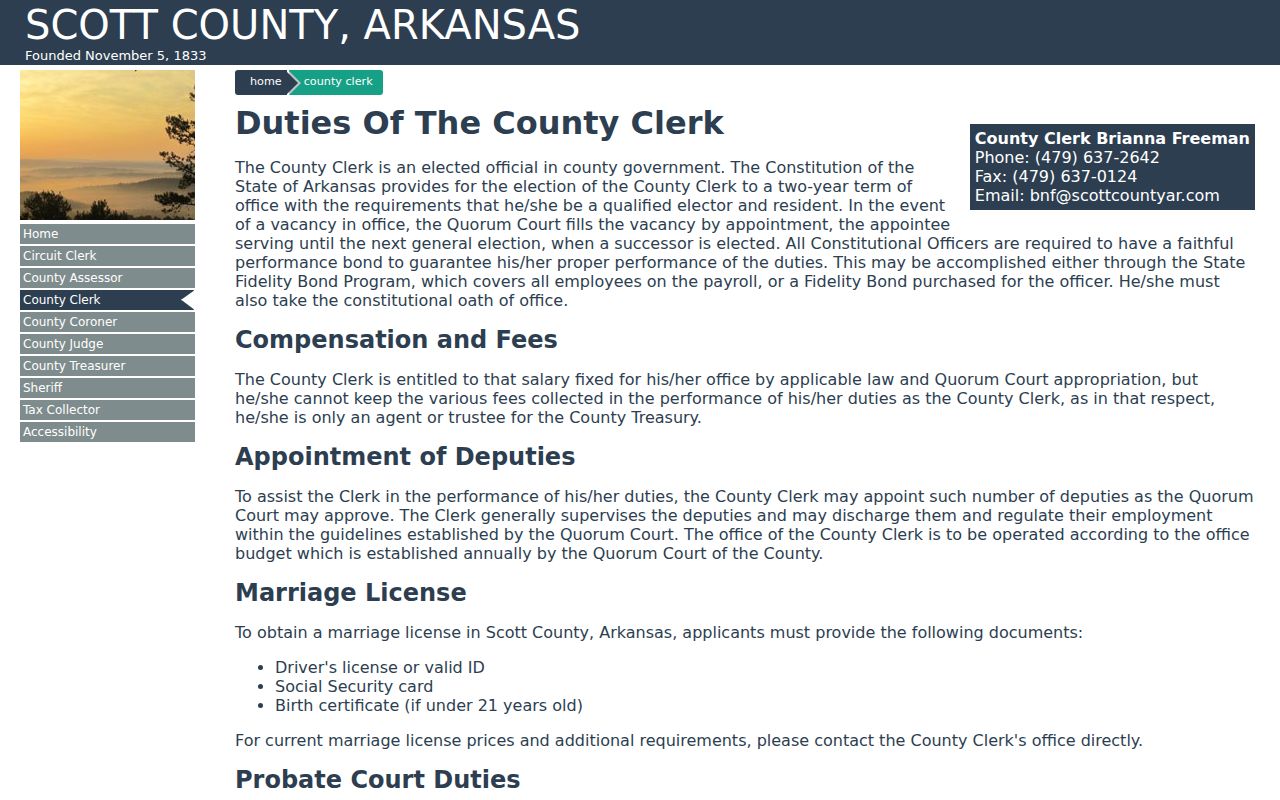
That probate work differs from the County Court's administrative record duties. Those duties cover annexations, county purchases, taxes, and appointments. Nor does it put every probate record online. Adoption files and covered confidential records behave nothing like an ordinary public estate docket. Call the County Clerk at 479-637-2642 to confirm the right counter and access procedure.
What Cases Fill the Civil Docket
The Scott County civil court docket is not one undivided list. Each case classification routes the filing to a division and its clerk. Common categories in the local court structure include:
- General civil and property matters filed in Circuit Court.
- Domestic-relations cases such as divorce, custody, and support.
- Estate and guardianship proceedings in the probate division.
- Adoptions, which carry special confidentiality limits.
- Small claims and other limited civil cases in District Court.
Circuit civil cases draw assignments under the Fifteenth Circuit plan. The official profiles for Division 2 and Division 3 document the judges serving the circuit.
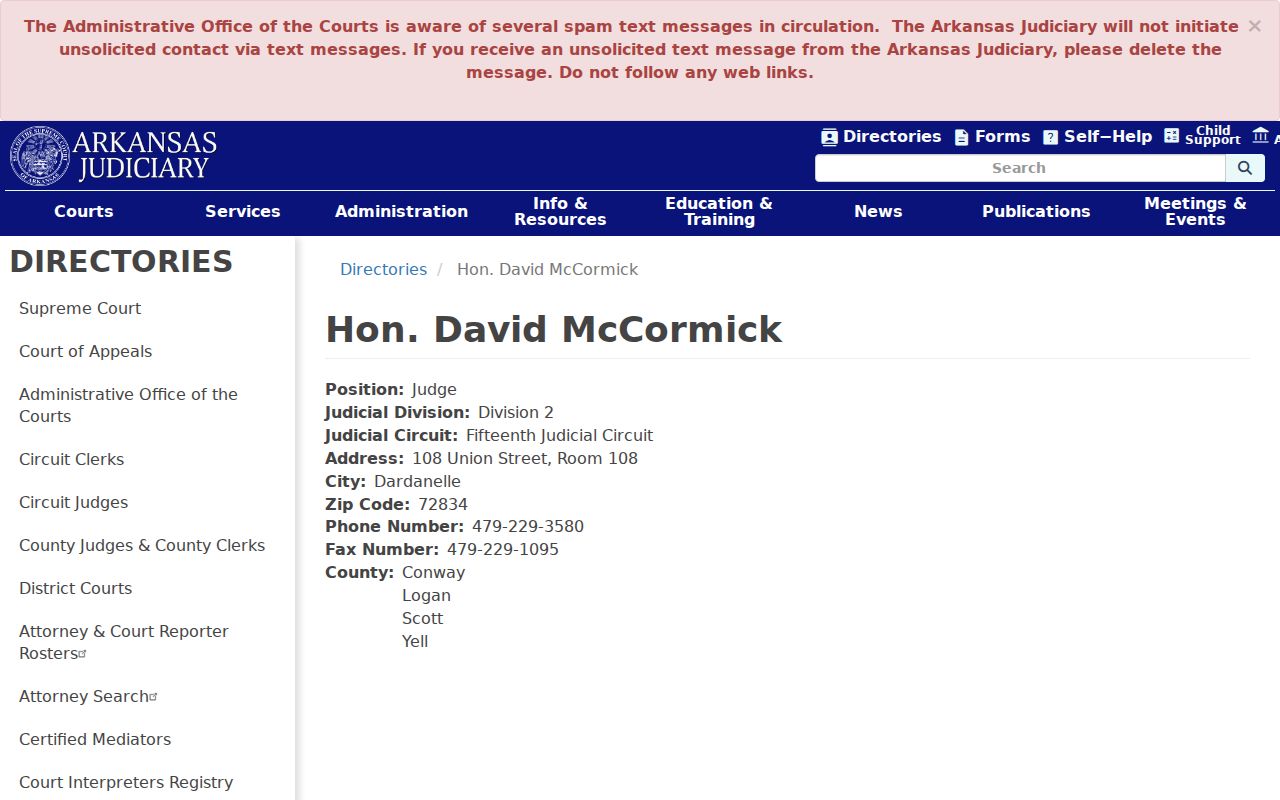
The Division 2 profile backs up the domestic assignment context. The Division 3 profile supplies the other relevant civil, probate, and juvenile division context.
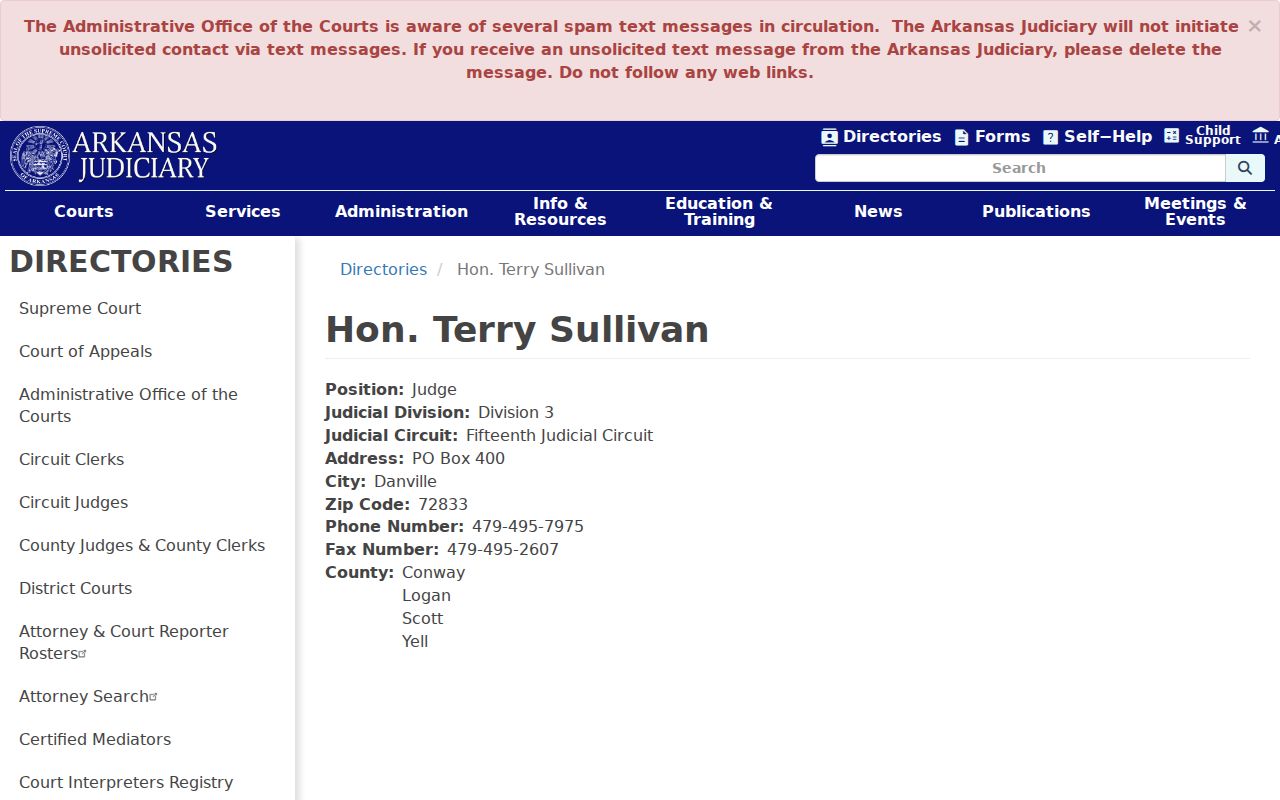
Judge profiles help you picture the circuit structure. The current docket and later assignment orders still control which judicial officer takes a particular case.
Scott County Civil Filing Sequence
Start with the complaint or petition. It states allegations and requested relief, not findings. From there, trace issuance and service: "Issued" means process was prepared, not that the other party received it. An answer or responsive motion shows a response, while a lone motion says nothing about whether the judge granted it.
Docket flow: Complaint or Petition › Process and Service › Answer or Motion › Setting › Order or Trial › Judgment › Post-Judgment Activity.
Match every motion to a later order. Then work through dismissal, nonsuit, default, trial judgment, or appeal entries. Read post-judgment writs, abstracts, garnishments, and satisfactions apart from the merits judgment. Exact terms may drive your next step. Get the signed order instead of trusting short entry text.
Hearings on the Civil Docket
A civil setting can surface in several spots. Try Future Events, a notice of hearing, a scheduling order, or a later docket entry. Compare all four. The newest valid order can bump an older date. A filing date is not the hearing date. A status setting is not necessarily a trial. When entries conflict in a Scott County Circuit matter, call the Circuit Clerk at 479-637-2642.
Scott County publishes no separate daily civil-calendar portal. The practical chain runs through Search ARCourts, the latest notice or order, the clerk's phone, and courthouse postings. At the courthouse, ask for the day's posted docket and whether a public terminal exists. Since its availability and location go unpublished, call first. The full Scott County Court Schedule explains how to verify a moved or imminent setting.
Note: A continuance moves a setting. It neither dismisses the Scott County civil case nor erases prior entries.
Scott County Civil Outcome Terms
Outcome labels on a Scott County civil docket carry distinct meanings. A default judgment means the court applied its default procedure. That is not merely a skipped hearing. A nonsuit or voluntary dismissal is one thing; a dismissal for want of prosecution is another. And summary judgment is an actual ruling under the governing rule. It is never just the filing of a motion.
- DWOP
- Dismissed for want of prosecution after the case did not move as required.
- Nonsuit
- A claimant's voluntary end to a claim, subject to procedural rules.
- Default judgment
- A formal judgment entered through default procedure after a qualifying failure to respond or defend.
- Satisfaction
- A post-judgment filing indicating payment or discharge to the extent stated.
When a label leaves you guessing, pull the linked order or request it from the clerk. One short docket line rarely tells you whether a dismissal was with prejudice, whether claims survive, or what relief a judgment actually grants.
Who Can See Civil Dockets
Public access to Scott County civil docket entries runs through Search ARCourts. Administrative Order No. 19 sets the access rules and the exclusions. Protected identifiers get redacted. Confidential or sealed material stays out of ordinary public view. Juvenile, adoption, sealed, and protected family cases are handled differently from a routine civil filing.
The Arkansas court-forms directory offers statewide civil cover and disposition forms. It is not a Scott County record-order portal, though. Copies of filings still come from the clerk.
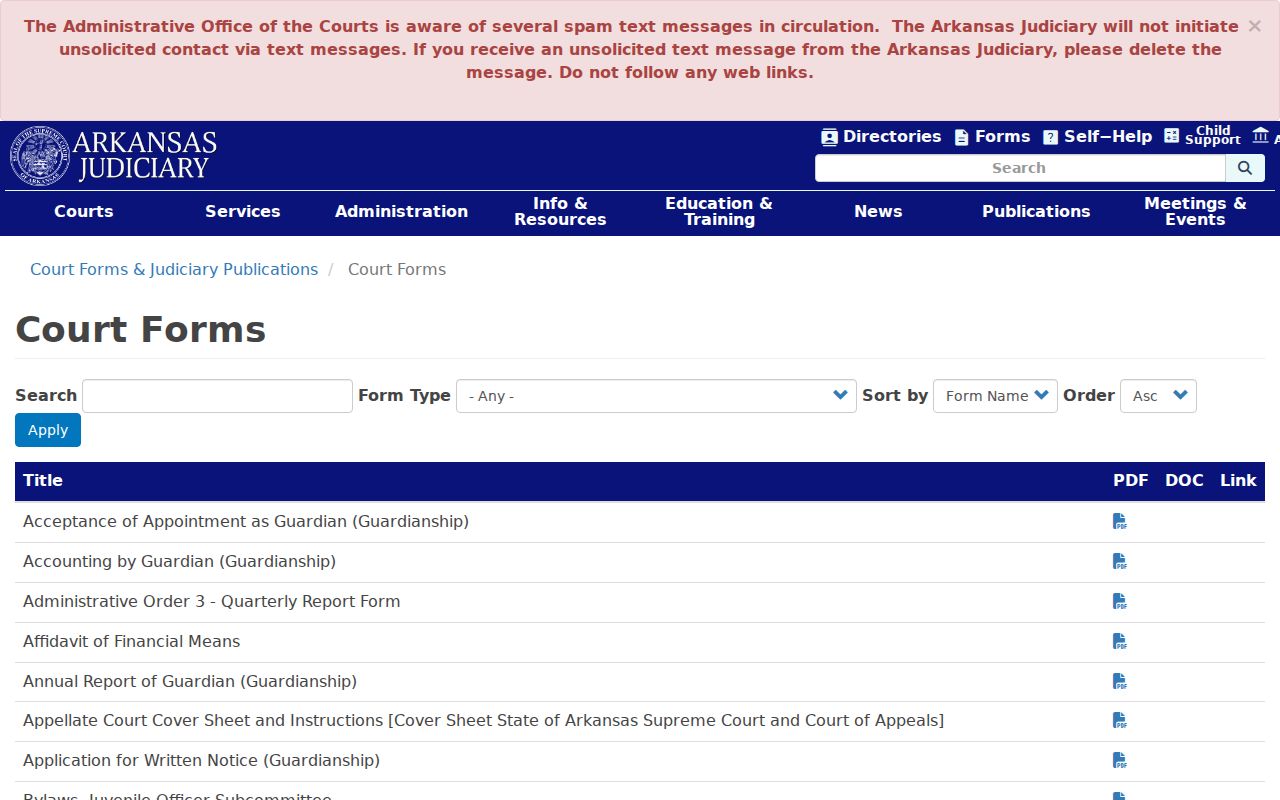
That official forms page is the place to find the right documents. For copies in an existing Scott County case, the clerk of that court is the source. The Arkansas Freedom of Information Act covers public records broadly, while Administrative Order 19 governs court-case access specifically.
Public does not mean fully online. An absent image can reflect portal scope, local digitization, redaction, confidentiality, or sealing rather than an absent filing.
Scott County Civil Copy Fallback
Circuit civil and domestic files: contact the Circuit Clerk. The address is 190 West First Street, Box 10, Waldron, AR 72958. Probate goes through the County Clerk. District civil and small-claims requests belong with the District Court clerk at Box 15, reachable at 479-637-4694. Beyond Search ARCourts, the advised channels vary. You can visit the courthouse, call, mail a request, or fax after confirmation. A courthouse terminal may also be an option.
Put the essentials in writing. List court, case number, caption, document title and filing date. Then add plain or certified copy, delivery preference, your contact, and your deadline. Ask the clerk up front about the fee and accepted payment. The county clerk pages carry a live email link, and the District contact lists dhallscdc@gmail.com. Verify the address before mailing, and leave sensitive identifiers out. Scott County offers no online certified-copy order, no local fee list, and no stated turnaround. A screen print is not a certified copy. A court reporter transcript is ordered from the reporter, not the records counter.
Old dockets take more than a portal search. The county reports that fire destroyed three of its seven courthouse buildings. A historical file may survive on paper, in a bound volume, on microfilm, elsewhere, or only in part. Give the clerk an approximate year and case type. Then ask which record series still exists. Portal coverage does not reach the nineteenth or early twentieth century. For genealogy and local-history work, one thing may matter most. The clerk's knowledge of surviving volumes can outweigh any name search.
Entry but no PDF? Give the responsible clerk the exact docket-entry date and document title, then ask whether the public filing can be inspected or copied.